A Hidden Secret Smart Students Use to Choose Their Career

Selecting the right career isn't just about picking a stream—it's about a "hidden" strategy that smart students use to stay ahead in a rapidly changing world. Most Students choose their careers based on marks, pressure, and trends, but smart students choose based on strategy, awareness, and validation.
They don't just "pick" a career; they reverse-engineer one. They use a hidden secret: reverse-engineering their dream future, then testing it against their real strengths and the changing job market.
Reverse Engineering
It isn't guesswork. It's a step-by-step process which involves self-assessment, exploration, networking, and aptitude audits. Jobs are changing quickly. By 2027, we will see significant growth in fields such as AI, green energy, and digital health. Students who follow this approach stay on track. They choose paths that suit their needs and lead to lasting success.
Step 1: Self-Assessment – Know Yourself First
Before looking at job boards, successful students look inward. A career isn't just about what you like (passion); it's also about what you're naturally wired to excel at.
- The Audit: Figure out what your cognitive strengths are. It could include skills such as spatial reasoning, effective language use, or logical thinking.
- The Goal: Find where your natural strengths and valuable job skills meet. If you are good at solving problems, look for jobs that reward your ability to think critically, instead of just choosing stable office work.
Tools they use:
- Reflection journals
- Personality tests
- Feedback from teachers/parents
Career clarity starts with self-awareness.
Step 2: Exploration – Test Careers Hands-On
Explore options by reading job descriptions, watching day-in-the-life videos on YouTube, and taking free courses, such as Google Career Certificates on Coursera.
Micro-Exploration: Top students use "Micro-Exploration" to test career paths through low-stakes methods such as job shadowing and certifications. This quick feedback helps them avoid years of studying the wrong field. Discovering a dislike for a career after a week is better than after four years.
Pro Tip: Attend career guidance fairs organised by bodies like CBSE or local colleges. Before you attend, prepare a list of 5 dream roles, then ask exhibitors, "What surprised you most about this job?" Take notes and follow up on LinkedIn.
Step 3: Networking – Learn from Real Pros
Smart students don't network for jobs; they network for clarity, and that's what sets them apart. They connect with experts not to ask for a referral, but to ask, "What is the most frustrating part of your work?"
The "Hidden" Intel: This reveals the industry's gaps—problems that aren't yet being solved. By identifying these gaps, they can position themselves as the solution before they even graduate.
Pro Tip: Connect with professionals through informational interviews and LinkedIn alums for insights. Attend webinars and consider shadowing a professional. At career fairs, ask questions about essential skills and challenges to build contacts and gain clarity.
Step 4: Aptitude Audits – Validate with Science
Smart students don't rely solely on feelings; they use data.
What is an Aptitude Audit?
A structured process that evaluates logical ability, numerical skills, verbal ability, and personality traits to identify suitable careers and avoid poor decisions. It turns guesswork into smart, fact-based decision-making.
Test yourself:
Marks show memory, not talent. Aptitude tests measure natural strengths such as logical thinking and creativity.
- Free options: YouScience or Careersmart skills audit.
- Paid: Professional counselling.
Match results to careers: High spatial skills? Architecture/Design. Analytical? Data science.
Step 5: Build Your Future-Proof Plan
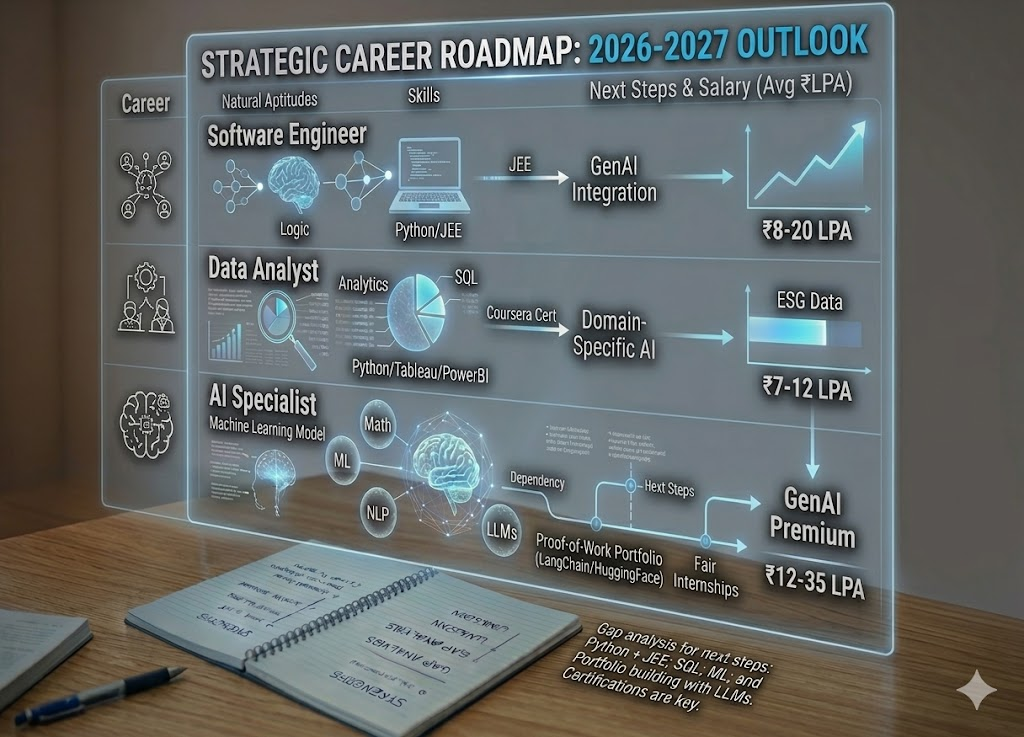
- Choose 3 dream careers to explore.
- List requirements (like JEE for IIT, skills bootcamps for others, and many more).
- Gap analysis: What do you need? (e.g., coding course).
- Timeline: last stream[school] → college → first job.
The world is changing quickly, and one degree is no longer enough. Future-proof students focus on Skill Stacking, which means combining different skills to offer a unique value.
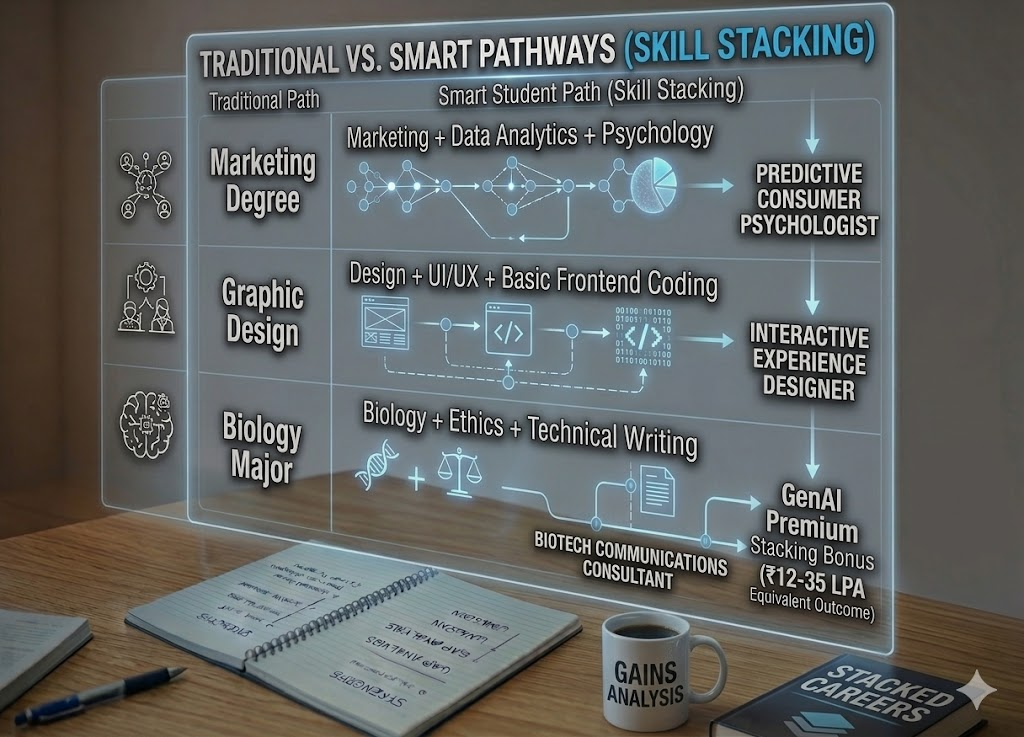
Example:
The Bottom Line
The "secret" isn't a secret at all—it's a shift in mindset. Stop chasing the "best" career and start building the one that fits your unique aptitude and desired lifestyle. By reverse-engineering your path, you aren't just following a map; you are the one drawing it.
"Don't just read this—go to LinkedIn today, find one person in your
'Dream Job,' and message them the 'Frustration Question' from Step 3."