13 Articles • 3 Categories
Where Knowledge Connects • Insights • Research • Stories
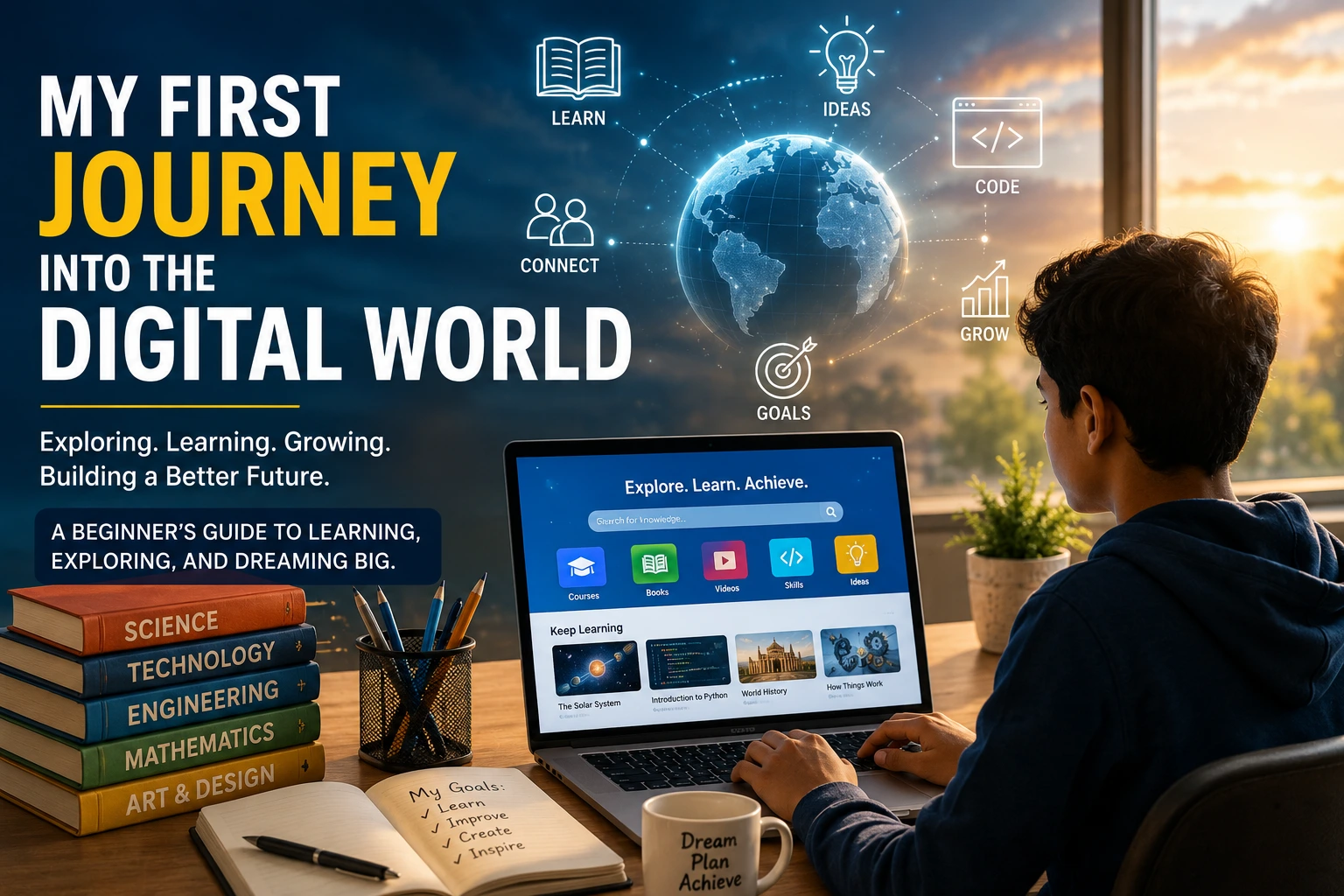
There is a unique feeling that comes with using a computer and the internet for the first time. It is more than just turning on a laptop—it is opening a door to endless knowledge, creativity, and opportunities. Every search, every lesson, and every new skill learned becomes a step toward a brighter future.The internet is often called the world's largest library. Within a few clicks, anyone can learn about science, mathematics, history, languages, art, technology, and almost any topic imaginable. Instead of using technology only for entertainment, new users can make it a powerful learning companion.Learning Without LimitsOne of the first things to explore is online learning. Educational videos, interactive lessons, and digital books make difficult subjects easier to understand. Learning at your own pace allows you to revisit concepts until they become clear, making education more enjoyable and effective.Reading articles, watching educational documentaries, and participating in online courses can expand knowledge far beyond the classroom. Every day offers an opportunity to discover something new.Building Digital SkillsLearning how to use a computer is an important life skill. Beginners can start with simple tasks such as:Creating documents and presentationsOrganizing files and foldersUsing email professionallyTyping efficientlySearching for reliable information onlineThese skills are valuable for higher education, future careers, and everyday life.Exploring TechnologyTechnology is shaping the future in remarkable ways. Learning about programming, robotics, cybersecurity, and artificial intelligence can inspire curiosity and innovation. Even beginners can start writing simple programs and gradually build websites, applications, or games.The digital world encourages creativity. Whether it's designing graphics, editing videos, writing blogs, or creating presentations, technology provides countless ways to express ideas.Reading and ResearchThe internet provides access to millions of books, research articles, and educational resources. Reading regularly helps improve vocabulary, communication skills, and critical thinking. Exploring different perspectives also encourages curiosity and lifelong learning.Connecting with the WorldTechnology makes it possible to communicate with people from different countries, learn about diverse cultures, and collaborate on projects. Virtual tours, online museums, and educational communities allow users to experience the world without leaving home.Staying Safe OnlineWhile the internet offers incredible opportunities, it is important to use it responsibly. Every user should remember to:Protect personal information and passwords.Verify information before believing or sharing it.Be respectful in online conversations.Avoid suspicious websites and unknown downloads.Balance screen time with healthy offline activities.Responsible digital habits create a safe and positive online experience.Looking AheadThe first experience with a laptop and the internet is only the beginning. Every new skill learned builds confidence and opens new possibilities. Today's beginner can become tomorrow's software developer, scientist, entrepreneur, teacher, designer, or innovator.Technology is not just about using devices—it is about solving problems, creating opportunities, and improving lives. With curiosity, dedication, and continuous learning, anyone can transform their future through the power of the digital world.ConclusionEvery great journey starts with a single step. The first click on a laptop, the first online lesson, or the first search on the internet can spark a lifelong passion for learning. By using technology wisely, exploring new ideas, and developing valuable skills, anyone can unlock opportunities that once seemed impossible. The digital world is full of possibilities, and the adventure has only just begun.
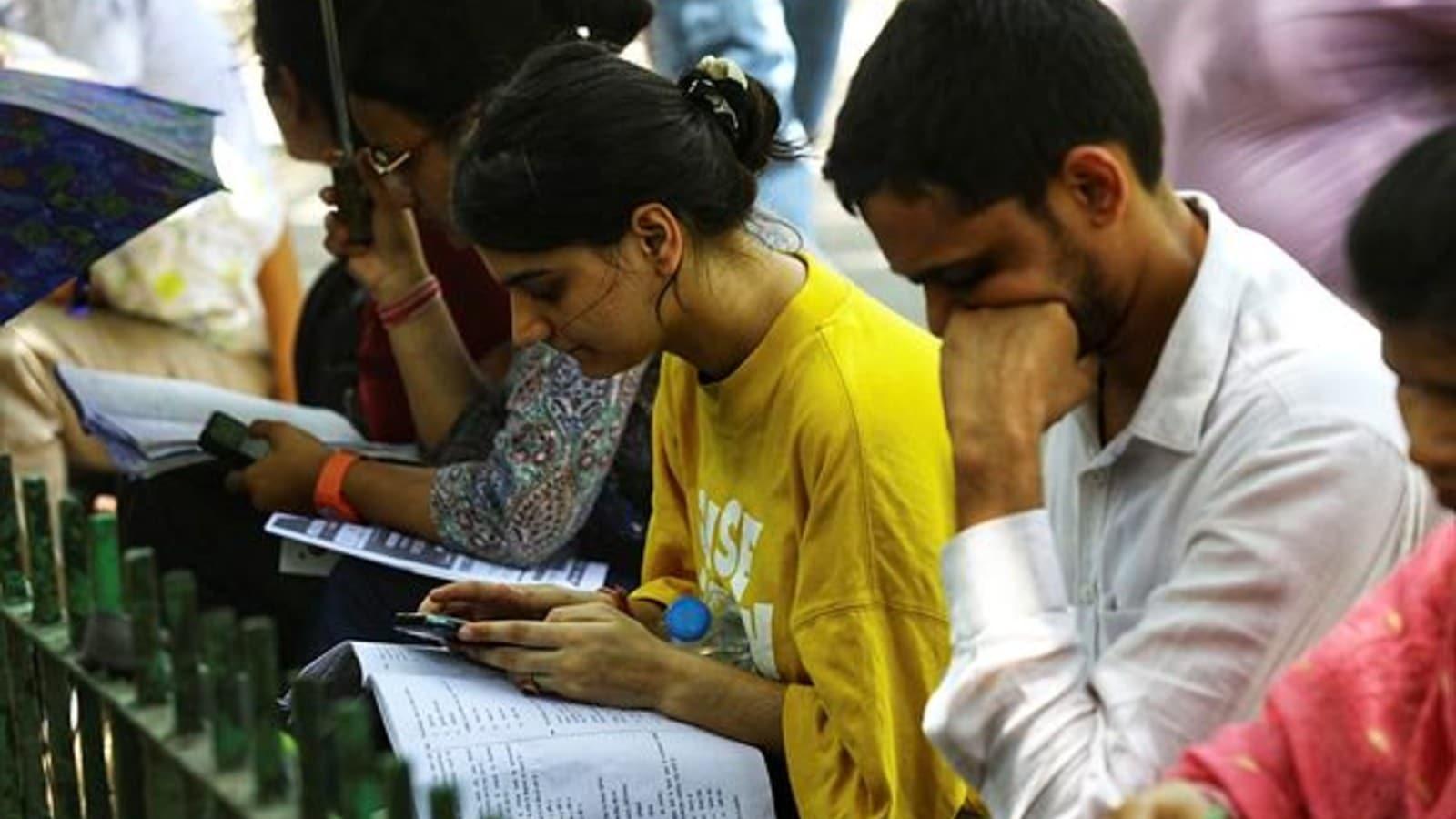
The National Eligibility cum Entrance Test is facing important changes in 2026. People still remember the paper leak controversy from 2024. Now, the focus is on new qualifying standards and changes to the test structure for the upcoming academic years.1. Drastic Reduction in Qualifying PercentilesThe National Board of Examinations in Medical Sciences has made an important change by lowering the qualifying percentile for the NEET-PG exam for the 2025-26 admission cycle. This decision has sparked further concerns about the potential and standards of medical education.The Shift: The qualifying score for the general category has been lowered from the 50th percentile to the 7th percentile.Reserved Categories: For some reserved categories, the government has set the passing score to 0.The Objective: This policy was put in place to fill thousands of vacant postgraduate seats that had gone unfilled in previous years. However, medical groups have criticised this decision as "illogical," saying it might lower the academic standards and quality of the medical workforce.2. Legal Battles Over State Domicile and ReservationAn important legal case about "reduced percentile" is being discussed in the High Court and the Supreme Court.In April 2026, the Rajasthan High Court considered a case (No. 4247/2026) that questioned whether candidates from reserved categories in other states (who do not live in Rajasthan) should receive reduced qualifying scores for stray vacancy rounds.The petitioners reasoned in court that it is one-sided to deny these benefits to other state candidates. They believe this approach leads to "national wastage" of medical seats, a point the Supreme Court has mentioned before.3. Structural Reforms: The Move to NExTThere is a renewed push to implement the National Exit Test (NExT).Integrated Assessment: NExT is designed to replace the current system by acting as a unified MBBS exit exam, a licensure exam, and the eligibility test for postgraduate seats (replacing NEET-PG).Status: Despite repeated delays, recent editorials and official notices from the National Medical Commission (NMC) emphasise that a "competency-based" assessment—relying on clinical vignettes rather than simple MCQ shortcuts—is vital to address the shortcomings of the marks-driven NEET system.4. Exam Frequency and Mental HealthTwice-a-Year Exam: Following feedback from professional organisations, it was decided that two NEET exams will continue through 2026, with a plan to permanently switch back to a single annual exam only after the current transition period is complete.Psychological Safety: The focus is now on how these exams affect students' mental health. Reports from the Indian Psychiatric Society show an alarming rise in student burnout and stress due to the high stakes of NEET-UG. This situation has led to calls for more supportive and fair selection processes.ReferencesShaikh, S. J., Srivastava, K., & Patole, I. M. (2026). Bridging equity, empathy, and evidence in NEET-UG reform: A critical response. Journal of Family Medicine and Primary Care, 15(5). https://doi.org/10.4103/jfmpc.jfmpc_919_25Suman, A., Gupta, T. P., & Rai, S. (2026). Reforming Medical Education in India: Beyond Marks as the Sole Determinant of Postgraduate Seat Allocation. Cureus, 18(3). https://pmc.ncbi.nlm.nih.gov/articles/PMC13055566/High Court of Judicature for Rajasthan at Jodhpur. (2026). Federation of Private Medical and Dental Colleges of Rajasthan v. State of Rajasthan (S.B. Civil Writ Petition No. 4247/2026). https://www.livelaw.in/pdf_upload/2026/04/16/2068000424720261-667842.pdf
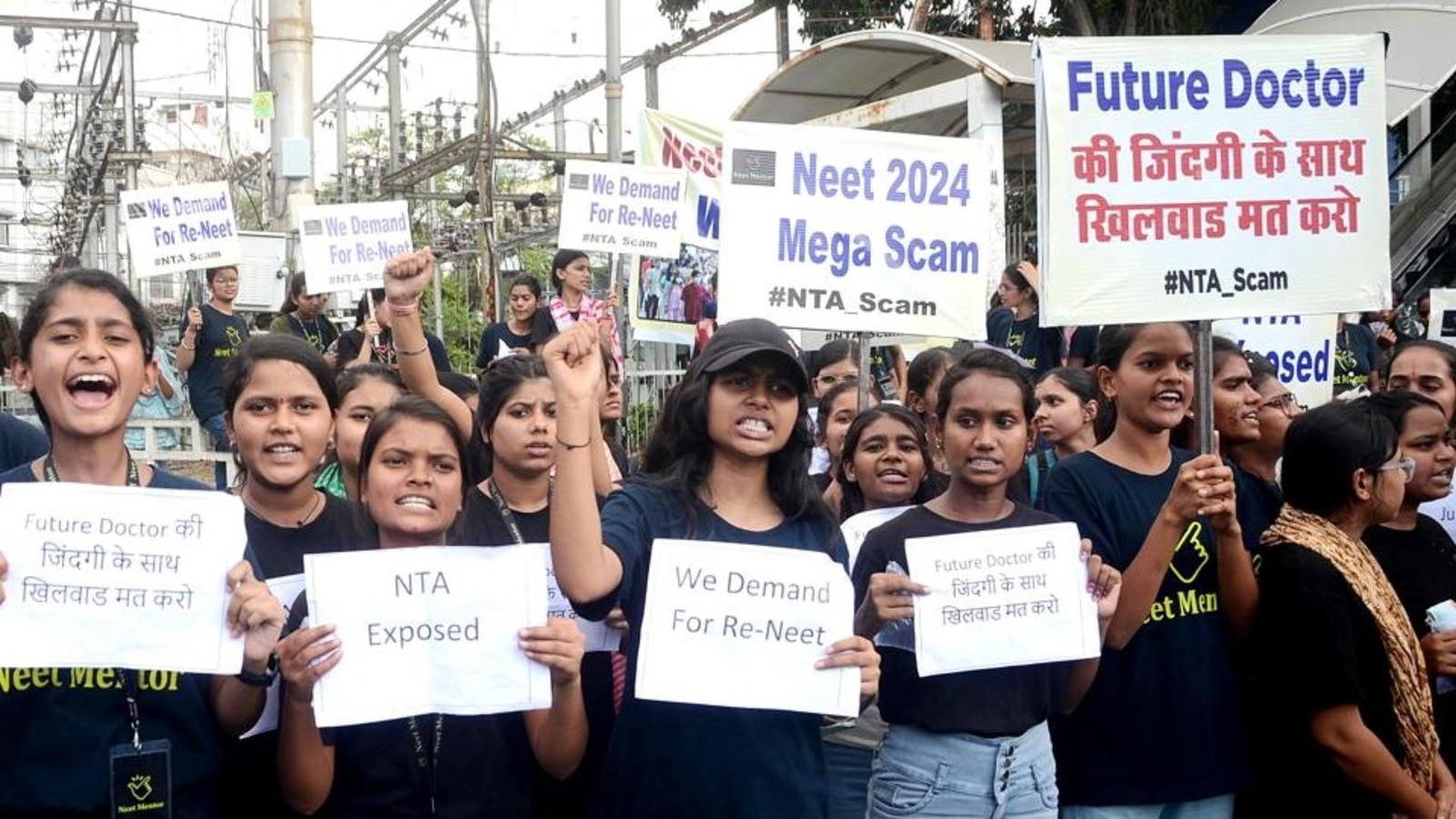
NEET 2026 Controversy OverviewThe government held the NEET UG 2026 exam on May 3. Concerns arose about the possible leaks of the exam paper, especially at coaching institutes in Sikar, Rajasthan. Just two days before the test, a "guess paper" containing 140 to 300 NEET exam questions, worth a total of 600 marks, was circulated.In response, the Rajasthan Special Operations Group (SOG) arrested 13 people linked to Jhunjhunu, Sikar, and Dehradun. Initially, the National Testing Agency (NTA) stated there were no major leaks. However, on May 11, the NTA cancelled the entire exam due to public dissatisfaction.We will re-examine and announce new dates and updated admit cards shortly at neet.nta.nic.in.Paper Leak DetailsA 150-page PDF with Physics, Chemistry, and Biology questions went viral before May 3.According to SOG investigations, an MBBS student in Kerala transferred NEET questions to a postgraduate operator in Sikar, and from there, the distribution began.The shared PDF contained 140 questions identical to those on the exam, proving that the cheating scheme spread across states.The NTA began using a watermarking system to track, but faced criticism for being slow and for resembling the delays seen in the 2024 Bihar leaks.The CBI has now taken over the investigation following the cancellation of the NEET exam.Grace Marks IssueIn 2024, as exams were delayed at six exam centres, 1,563 students received "grace marks," leading to controversy and score cancellations. Some students were allowed to retake the exam on June 23, and 67 scored a perfect mark of "720".In 2026, the issue with grace marks was fixed; however, score leaks led to complete score cancellations, with no possibility of recovery.These events show the challenges in the exam process. In 2024, grade marks impacted students, and in 2026, score leaks led to cancellations.Re-NEET DevelopmentsThe NTA announced that all candidates must retake the NEET UG 2026 exam, pending government approval, with new exam dates yet to be announced as of May 12.This full re-test comes after a partial re-test in 2024. It aims to bring justice for the exam leaks that affected students, resulting in over 2.2 million.Results from the May 3 exam are now nullified, and the reexam will be rescheduled for another date.Implications for StudentsRecent events have exposed weaknesses in India's competitive exams, damaging trust in NTA processes and coaching systems, underscoring the need for more reliable resources and guidance. For Brigaly users, this situation shows why secure study tools and career options on platforms like yours are important for navigating uncertain times.
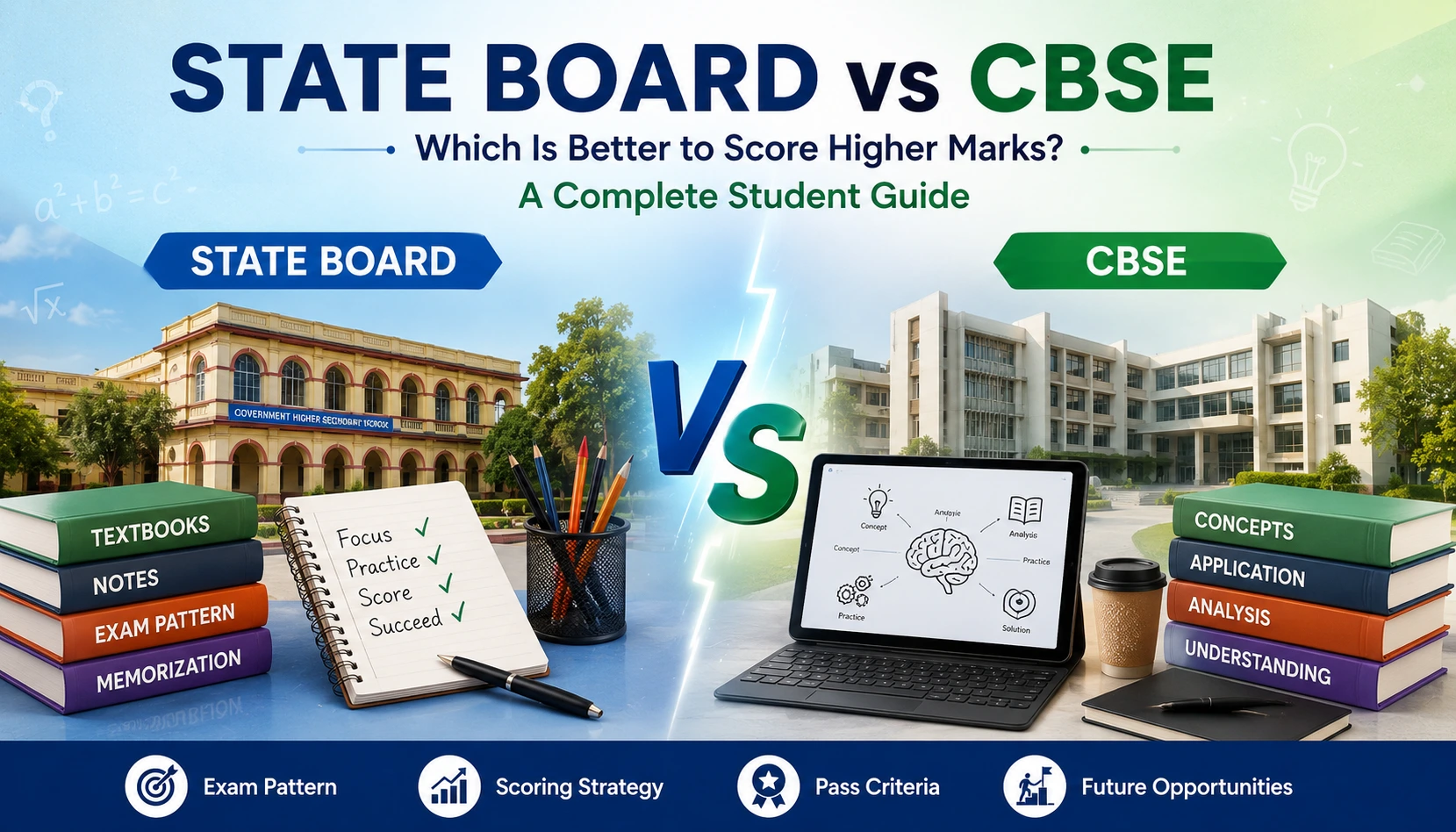
When it comes to the "high marks" debate, the answer isn't as simple as choosing one board over the other. The definition of a "good score" has evolved in 2026, especially with CBSE's shift toward competency-based learning and the varied scoring patterns across different State Boards.If your goal is to see 95%+ on your marksheet, you need to understand how each board's "scoring engine" works.1. CBSE: The "Science" of High ScoringCBSE is often perceived as tougher because of its severity, but it is designed to be fair and transparent. For a smart student, this means the path to 95% is a predictable formula.Objective Advantage: In 2026, CBSE papers will include 20% MCQs and 50% competency-based questions. If you understand the concepts, these are "binary" marks—leaving no room for subjective bias.The 9-Point Grading System: CBSE uses a scale from A1 to E2. An A1 grade (the top 1/8th of passed candidates) signals you are a topper, whether your score was a 92 or a 98.Internal Boost: Most subjects have a 20-30% for the internal assessment component. Doing strong project work will likely secure these marks before taking the exam.2. State Board: The Traditional Strategy (e.g., Tamil Nadu)Historically, State Boards were considered "easier" because they relied on textbook memorisation, but many are now aligning with national standards.The TN Board "Numbers Game": In the Tamil Nadu State Board, your admission to top engineering colleges depends on a specific 200-point cut-off formula.Formula: Maths + (Physics\2) + (Chemistry\2) = Cut-Off.The Logic: Maths is counted fully, making it the "make-or-break" subject for high-ranking success.Subjective Marking: Unlike CBSE's objective-heavy papers, many State Boards still favour a structured mix of MCQs, 2-mark, 3-mark, and 5-mark questions.Local Advantage: State boards prioritise regional language and culture. Excelling in your mother tongue can significantly "pull up" your overall percentage.Comparing the "Mark-Ability"The Verdict: Which Should You Choose?Choose CBSE for high marks if:You are good at problem-solving and logic.You want your 95% score to meet the requirements of JEE, NEET, or CUET.You prefer a board that rewards internal projects and practicals.Choose State Board for high marks if:You want a less intense syllabus to focus on state-level entrance exams.You are comfortable with traditional descriptive exams and language-heavy scoring.You are aiming for a specific state engineering/medical rank.The Bottom LineIn 2026, a 95% in CBSE is highly valued by national universities, while a 95% in a State Board might make you a "State Topper" with specific local benefits. Marks depend on your preparation style, not just the board's name.

Selecting the right career isn't just about picking a stream—it's about a "hidden" strategy that smart students use to stay ahead in a rapidly changing world. Most Students choose their careers based on marks, pressure, and trends, but smart students choose based on strategy, awareness, and validation.They don't just "pick" a career; they reverse-engineer one. They use a hidden secret: reverse-engineering their dream future, then testing it against their real strengths and the changing job market.Reverse EngineeringIt isn't guesswork. It's a step-by-step process which involves self-assessment, exploration, networking, and aptitude audits. Jobs are changing quickly. By 2027, we will see significant growth in fields such as AI, green energy, and digital health. Students who follow this approach stay on track. They choose paths that suit their needs and lead to lasting success.Step 1: Self-Assessment – Know Yourself FirstBefore looking at job boards, successful students look inward. A career isn't just about what you like (passion); it's also about what you're naturally wired to excel at.The Audit: Figure out what your cognitive strengths are. It could include skills such as spatial reasoning, effective language use, or logical thinking.The Goal: Find where your natural strengths and valuable job skills meet. If you are good at solving problems, look for jobs that reward your ability to think critically, instead of just choosing stable office work.Tools they use:Reflection journalsPersonality testsFeedback from teachers/parentsCareer clarity starts with self-awareness.Step 2: Exploration – Test Careers Hands-OnExplore options by reading job descriptions, watching day-in-the-life videos on YouTube, and taking free courses, such as Google Career Certificates on Coursera.Micro-Exploration: Top students use "Micro-Exploration" to test career paths through low-stakes methods such as job shadowing and certifications. This quick feedback helps them avoid years of studying the wrong field. Discovering a dislike for a career after a week is better than after four years.Pro Tip: Attend career guidance fairs organised by bodies like CBSE or local colleges. Before you attend, prepare a list of 5 dream roles, then ask exhibitors, "What surprised you most about this job?" Take notes and follow up on LinkedIn.Step 3: Networking – Learn from Real ProsSmart students don't network for jobs; they network for clarity, and that's what sets them apart. They connect with experts not to ask for a referral, but to ask, "What is the most frustrating part of your work?"The "Hidden" Intel: This reveals the industry's gaps—problems that aren't yet being solved. By identifying these gaps, they can position themselves as the solution before they even graduate.Pro Tip: Connect with professionals through informational interviews and LinkedIn alums for insights. Attend webinars and consider shadowing a professional. At career fairs, ask questions about essential skills and challenges to build contacts and gain clarity.Step 4: Aptitude Audits – Validate with ScienceSmart students don't rely solely on feelings; they use data.What is an Aptitude Audit?A structured process that evaluates logical ability, numerical skills, verbal ability, and personality traits to identify suitable careers and avoid poor decisions. It turns guesswork into smart, fact-based decision-making.Test yourself:Marks show memory, not talent. Aptitude tests measure natural strengths such as logical thinking and creativity.Free options: YouScience or Careersmart skills audit.Paid: Professional counselling.Match results to careers: High spatial skills? Architecture/Design. Analytical? Data science.Step 5: Build Your Future-Proof PlanChoose 3 dream careers to explore.List requirements (like JEE for IIT, skills bootcamps for others, and many more).Gap analysis: What do you need? (e.g., coding course).Timeline: last stream[school] → college → first job.The world is changing quickly, and one degree is no longer enough. Future-proof students focus on Skill Stacking, which means combining different skills to offer a unique value.Example:The Bottom LineThe "secret" isn't a secret at all—it's a shift in mindset. Stop chasing the "best" career and start building the one that fits your unique aptitude and desired lifestyle. By reverse-engineering your path, you aren't just following a map; you are the one drawing it. "Don't just read this—go to LinkedIn today, find one person in your 'Dream Job,' and message them the 'Frustration Question' from Step 3."
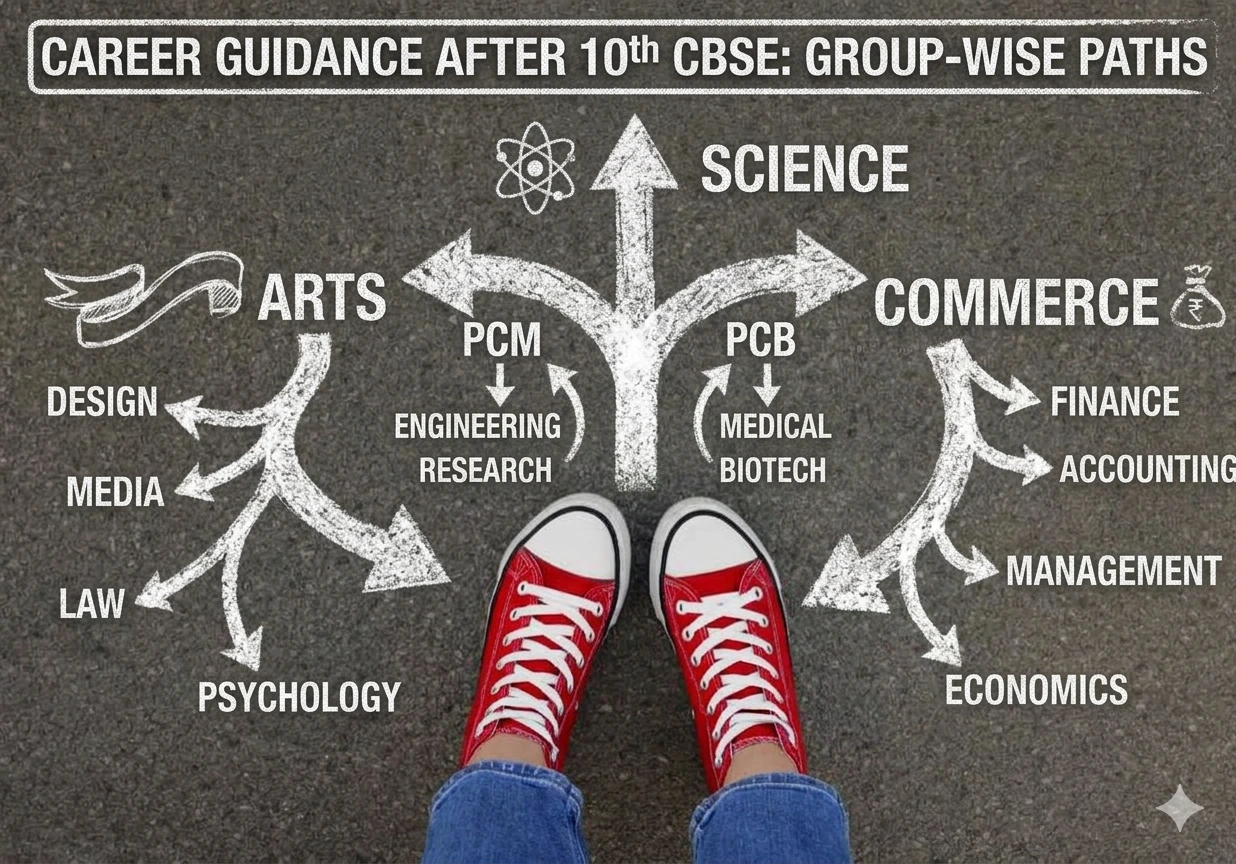
Congratulations on passing your Class 10 board exams! At this pivotal "junction" in your academic journey, choosing the right "topic" or stream after Class 10 is essentially a three-way decision between Science, Commerce, and Humanities. However, emerging skill-based paths are becoming equally viable in 2026. This guide helps you understand which stream suits you and what careers you can pursue.Science Stream (PCM/PCB)PCM Group - The "Technical" PathPCB Group - The "Medical" PathPCMB - Both [IT and Medical Subjects: Physics, Chemistry, Maths and Biology. Optional: Computer Science, English, Psychology A rigorous combination that allows you to apply for both medical and engineering competitive examsCommerce Stream - The "Business" PathArts/Humanities Stream - The "Impact" PathVocational & Diploma Path- (The "Skill" Path)If you prefer hands-on learning and want to enter the workforce earlier. Polytechnic Diplomas: 3-year courses in fields like Computer Science or Mechanical Engineering that allow "lateral entry" into the second year of a degree.Emerging Skill Courses: Short-term certifications in Digital Marketing, Cybersecurity, Animation, and Graphic Design. Smart Tips for All GroupsAvoid: choosing based on friends, Pressure from others, and following the "Science is best" myth.Assessments First: Take psychometric tests or speak with an industry expert before stream lockReverse-Engineer: Pick two or three dream careers first and then trace back to the stream they requireThere is no single best stream—only the one that fits your interest, ability, and goals. With the right skills and mindset, you can succeed in any field.
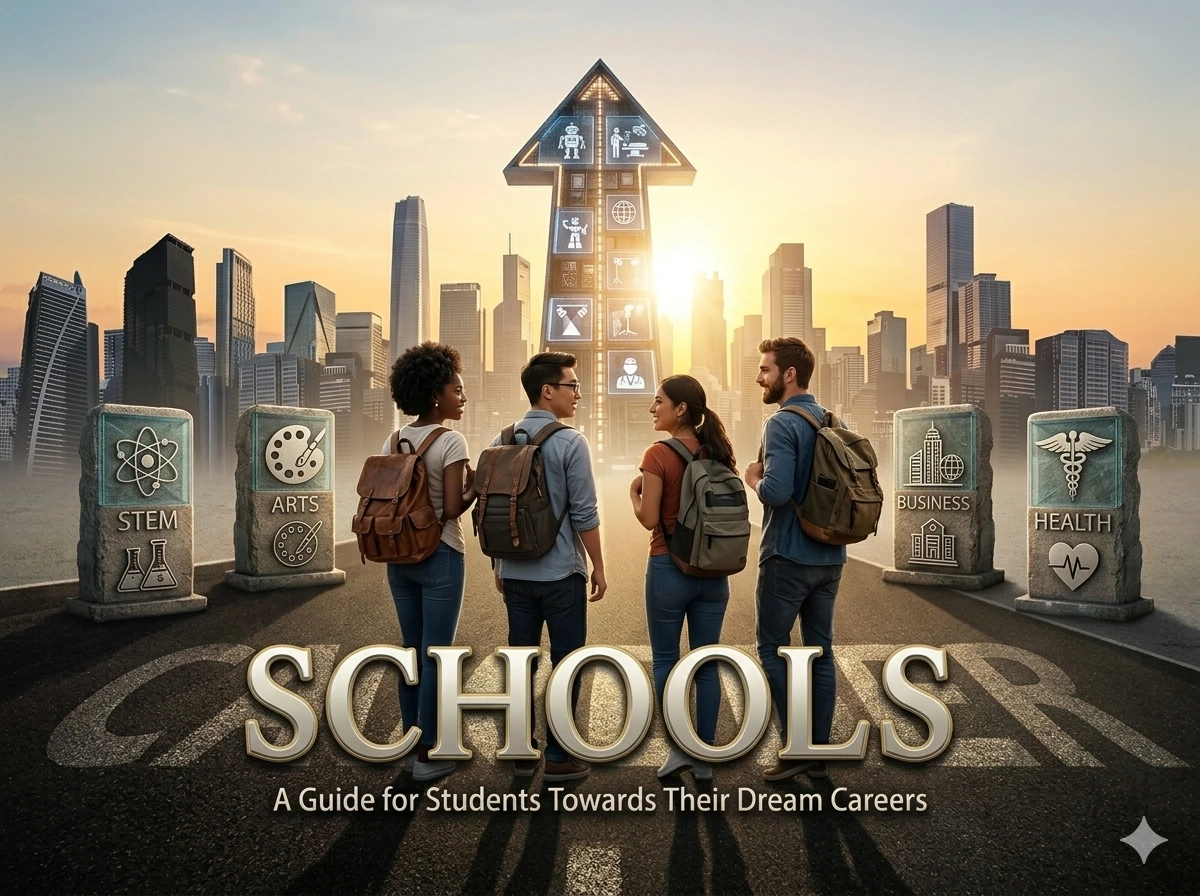
Schools are essential in guiding students toward their futures. In addition to teaching academic subjects, they help students discover their strengths, interests, and long-term goals. A well-organised, school-wide career guidance program ensures that all students receive consistent and meaningful support.Why Schools Need to Take Charge of Career GuidanceSchools are vibrant environments where educators, essential materials, and innovative products come together, empowering students to discover and learn in exciting, meaningful ways!.It helps the school to find out a lot likeStudent progress updatesCollaborate with educators to assess student growthIdentify the support they needHighlight any challenges they may faceLet's work together for their success!If you take a smart approach, you can help them reach their goal more easily.Step 1: Establish a Structured Student Profiling SystemSchools should implement a consistent method for understanding each student's strengths and areas for development.Step 2: Create Career Mapping GuidelinesSchools can really help students discover what they're good at and turn those talents into exciting career paths! It's all about exploring and finding what you love!Step 3: Integrate Real-World Skills into CurriculumI believe schools should make life and career skills a normal part of everyday classes rather than offering them as optional subjects. It's so important for students to learn these skills to help them succeed in the future!Step 4: Expand Career Awareness ProgramsSchools should actively expose students to a wide range of career options, including emerging fields.Examples include:Digital marketingUser experience designCybersecurityRenewable energyE-commerceContent creationThis broad exposure helps students explore beyond traditional career paths.Step 5: Develop Life Skills Through Structured ProgramsLet's put together fun, friendly programs in schools that help kids learn valuable life skills!Step 6: Promote Healthy Social and Professional BehaviourSchools have a great chance to help students build social skills that really matter in life. It can start with simple things—Teaching them to respect differencesUnderstand personal boundariesHandle disagreements calmly without turning them into conflicts.At the same time, helping them stay smart and safe online is just as important.When students feel supported and understood, school becomes a place they actually enjoy being in. These small but powerful skills help them grow into confident individuals who can work well with others and find their place in the real world.Step 7: Implement a School-Wide Career Guidance SystemCareer guidance should be embedded into the school's weekly and monthly schedule.Weekly Career Guidance PlanMeasuring School-Level ImpactSchools should track measurable outcomes to evaluate effectiveness.Here's a more natural take:Ways in Which Schools Can Make This a Reality!Don't try to do everything at once. Start simple and let it grow naturally:Start with simple career conversations during regular classesEquip teachers with a few basic tools to guide studentsInvite alumni or local professionals to share their journeysKeep brief notes on each student's interestsReview once in a while to see what's working and what needs to changeThis way, career guidance just becomes part of how your school runs, not some big extra program.Final StanceSchools are responsible for preparing students not only for exams but also for life beyond academics. A well-organised and reliable career guidance system enables students to make informed choices and develop essential skills.When schools integrate career guidance into their core system, they create an environment where every student can identify their strengths, explore opportunities, and move forward with clarity and confidence.
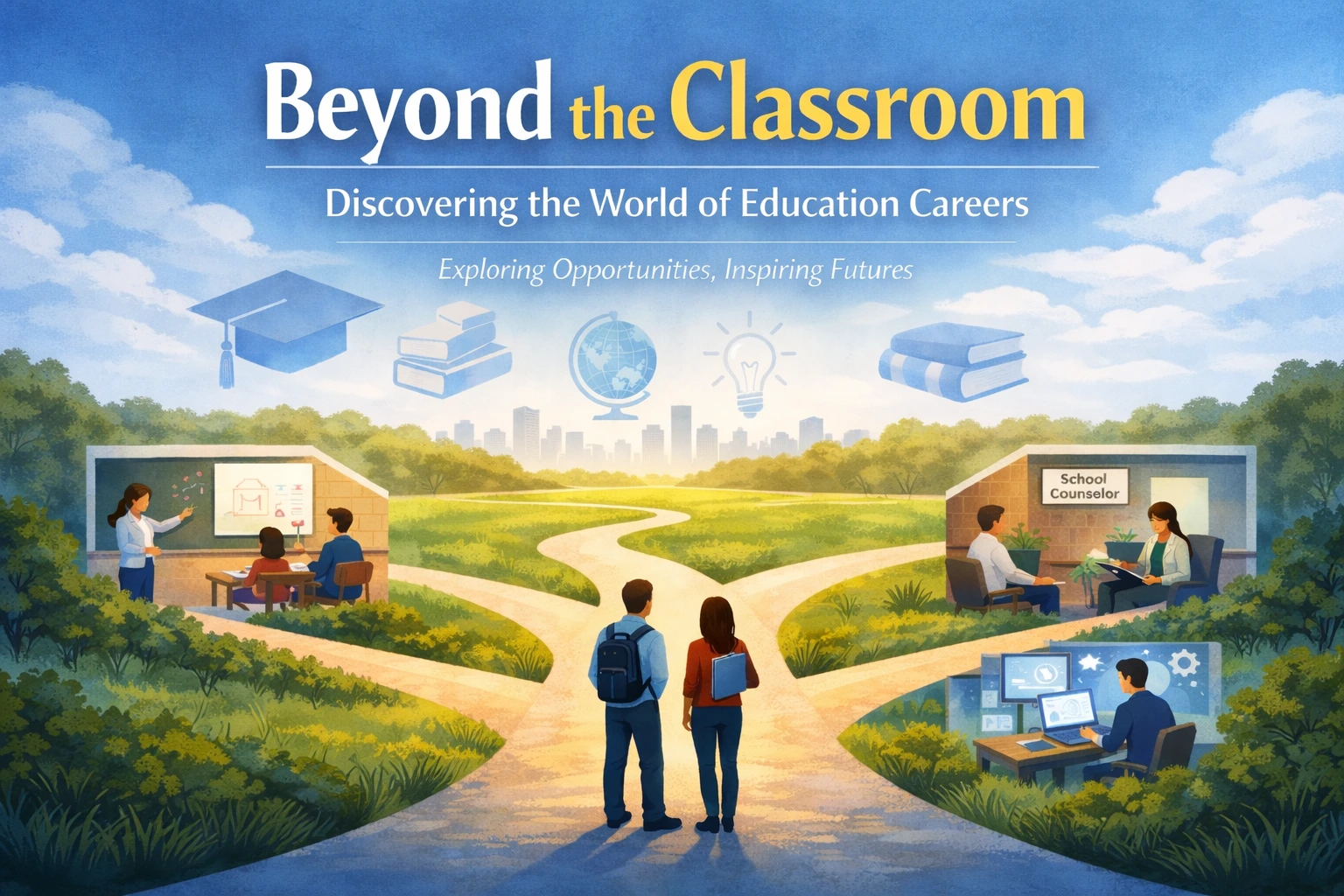
Beyond the Classroom: Discovering the World of Education CareersNo doubt that education can change students' lives. One's abilities and interests may be better suited for one of the many professional pathways in teaching. These professions in education assist students with their social growth, academic achievement, and professional development both within and outside of the classroom. This article will give you the details about the path to pursue an education career. Overview of Education Careers:There are numerous influential professions available, ranging from inclusive educational initiatives to ed-tech solutions for contemporary issues. Individuals passionate about education can pursue careers as teachers or non-teachers, presenting endless opportunities for those with education degrees to make a positive impact.Teaching rolesElementary school teachers: They are like young plants in a garden, educating children in science, social studies, literacy, and numeracy, laying the foundation for future learning. A high school teacher: They plan and conduct lessons for students in grades 9-10, focusing on providing lifetime learning skills and subject knowledge for future success.School counselors: They are responsible for creating and implementing support programs, career development, higher education, technology career path, and promoting healthy habits and emotional wellness.Special education teachers: They are in charge of instructing and training pupils who have mental, physical, or learning challenges. A special education teacher assists children with impairments in overcoming challenges related to their social behavior. Non-teaching rolesCurriculum writer: Curriculum writing involves researching, creating teachings, resources, exercises, and evaluations, and includes positions like instructional coordinators, curriculum experts, curriculum writers, and curriculum designers.Educational consultants: They work with parents, teachers, and students to improve learning environments, resources, and outcomes, including developing guidelines, expediting financial assistance, and providing career guidance.Office administrators: Their responsibilities include managing all assigned work, comprehending the policies of the school, coordinating all administrative procedures, overseeing budgets, policies, and events, and promptly resolving disagreements or other concerns.Paths to Pursue Education Careers:Required Education and CertificationsTo be appointed as a pre-primary or primary school teacher in any government or private school, one must possess a bachelor's degree in education. Acquiring a degree in education, teaching career, educational leadership, or administration can equip you with the abilities needed to succeed in this position. Professional associations occasionally provide certification possibilities for educators. These groups can also assist teachers in locating materials for ongoing education.Paths to Pursue Education CareersTo begin their professions, individuals who want to become educators need to obtain a postsecondary certificate or a degree in higher education or a related discipline. It will also be beneficial if they possess the necessary abilities to become successful educators. The field of education is broad and diverse, offering a multitude of alternate avenues that present distinctive and significant approaches to molding minds and effecting change.There are several ways to pursue a career in education, such as certification programs, website learning, online learning, part-time courses, distance education, and more. Educational requirementsFinishing your upper secondary education is the first step toward a career in teaching. Using the courses you choose in higher secondary, finish your bachelor's degree at one of the best bba colleges in India. Following the completion of your undergraduate studies, you may enroll in a recognized board to pursue a Bachelor of Education (B.Ed).Skills and Qualities Required for Education CareersIf you decide to progress in your profession during your tenure, the skills you learn to become a great teacher will also eventually make you a great leader. Developing strong soft skills alongside academic knowledge is essential for anyone looking to build a successful and fulfilling career in education. The following is a list of some crucial skill sets needed for employment in education:Good lectureshipComputer knowledge Critical Thinking CapabilitiesAdaptability and patience Collaboration and Communication SkillsOrganization SkillsCreative ThinkingLeadership CapabilitiesAdministrationTime-Management skillsBenefits of Education Careers:Impact on Future Generations: Education careers offer a chance to positively impact future generations, contribute to society, and experience professional and personal fulfillment as teachers educate adults who will lead their communities and workplaces.Job satisfaction: You'll be happier at your job if you are employed in a discipline you're enthusiastic about. Every teacher has the capacity and the intention to carry out their responsibilities with the highest fervor to feel fulfilled by their work. Opportunities for Growth and Development: Careers in education might also aid in your personal development. There may be obstacles on your education path that will test your resolve, self-awareness, and ability to inspire yourself to succeed. Your level of education and self-awareness determines your capacity for reasoned and informed decision-making, and jobs in education can help you get there.Conclusion Since education gives us the knowledge we need for the future, it has greatly impacted everyone in society in the modern day. Numerous employment options are available to those with an education degree. A career in education is undoubtedly a noble one, which is why we have done our homework to assist people in locating their ideal position in the sector.

Educators shape more than just grades—they guide students toward meaningful career paths. With endless job options and rapidly changing industries, young minds often feel lost. Thoughtful career advice from teachers brings focus, assurance, and purpose.Understanding the Teacher’s Role in Career GuidanceTeachers are often the first mentors students turn to. Their role includes: Identifying student strengths and interests Providing accurate and updated career information Guiding students beyond textbook learning Encouraging informed decision-making Career guidance is not a one-time activity—it is a continuous mentoring process.🔍 Discovering Individual PotentialTeachers can evaluate key indicators by watching for:Strengths across different academic areas Engagement in co-curricular pursuit Skills in expression and critical thinking Genuine enthusiasm for specific topicsThese observations enable tailored career recommendations that match each student’s capabilities.🌟 Broadening Horizons Beyond Traditional PathsMost students know only familiar job roles. Teachers can expand their worldview by:Presenting varied opportunities across disciplines Showing how subjects apply in real professionsHighlighting growing sectors and in-demand abilitiesOrganising workshops or expert talksThis exposure encourages exploration of unconventional possibilities. choices.🧭 Stream Choices and Family InvolvementSmart stream selection requires teamwork with parents: Offer candid insights about the student’s abilitiesHelp families appreciate their child’s true potentialFoster constructive family conversationsEase pressure from unrealistic ambitionsUnited efforts yield the best results.🛠️ Hands-On Learning OpportunitiesTeachers should inspire students to pursue: Competitions, clubs, and skill-building eventsOnline training programs and credentialsReal-world projects and challengesPractical industry exposureSuch experiences solidify interests and boost self-assurance.💡 How Brigaly Empowers TeachersModern mentoring demands smart tools. Brigaly makes career guidance effortless: Unified Communication: Connect students, parents, and teachers on one secure platformDedicated Channels: Broadcast career news, opportunities, and resources efficientlyStudent Profiles: Gain deep insights for personalised recommendationsEasy Resource Sharing: Distribute articles, videos, and career content instantlyParent Partnerships: Keep families engaged and aligned on career goalsBrigaly brings structure, consistency, and impact to every guidance effort.⚠️ Real Challenges in Career Mentoring Teachers often navigate: Time constraints from teaching dutiesKeeping pace with shifting job markets Addressing varied student aspirations Balancing family expectations 🚀 Proven Strategies for Success Effective mentors: Schedule consistent personal check-ins Track evolving industry demands Leverage digital tools for organised outreach Welcome questions and dialogue Prioritise holistic growth over grades alone 🌈 The Lasting Impact Teachers aren’t merely instructors—they’re career catalysts. Supported by platforms like Brigaly, they guide students through uncertainty, unlock hidden strengths, and pave confident paths forward. Today’s wise mentoring creates tomorrow’s thriving professionals.Visit Brigaly – Your partner in transforming career guidance.Get started with Brigaly today: www.brigaly.com

Choosing a career path right after Class 10 can feel uncertain. However, early exploration helps students make informed decisions rather than rushed choices. Instead of waiting until later classes, understanding different career options now builds clarity, confidence, and direction.Why Early Career Exploration Matters Helps in selecting the right stream (Science, Commerce, Arts) Reduces confusion and last-minute pressure Builds awareness about future opportunities Aligns studies with interests and strengthsStudents who explore early are more confident and focused in their academic journey. Start with Self-UnderstandingBefore exploring careers, students should understand themselves: Which subjects do you enjoy the most? Do you like problem-solving, creativity, or communication? What activities excite you outside academics? This step is essential to avoid choosing a path based only on marks or external influence. Explore Different Career FieldsStudents should get exposure to a variety of fields: Science Careers – Engineering, Medicine, IT, Research Commerce Careers – CA, Business, Finance, Management Arts Careers – Law, Media, Design, Civil Services Understanding what each field offers helps in making better decisions later. Use Available Resources Attend career guidance sessions or workshops Watch educational videos and expert talks Read blogs, articles, and career guides Talk to teachers, seniors, and professionals Access to the right information simplifies decision-making.Instead of only reading, students should try: Basic coding or science experiments Writing, drawing, or creative activities Participating in competitions or clubs Hands-on experience gives a clearer idea of what suits you. Role of Parents in Career Exploration Parents should: Encourage curiosity and exploration Avoid forcing specific careers Provide exposure to different opportunities Support the child’s interests A supportive environment helps students make confident choices. Common Mistakes to Avoid Choosing careers based on friends or trends Following only marks, ignoring interest Not exploring enough options Relying on limited or outdated information Final ThoughtExploring career options early is not about finalising your future immediately—it is about understanding possibilities. The more you explore now, the better decisions you can make later. Clarity today leads to confidence tomorrow.