The 2026 Education Blueprint: Why Top Models Fail and How Brigaly Restores Trust
This blog examines modern educational models (2026), how institutions are evolving to stay relevant, and how Brigaly bridges the gap between perception and reality.
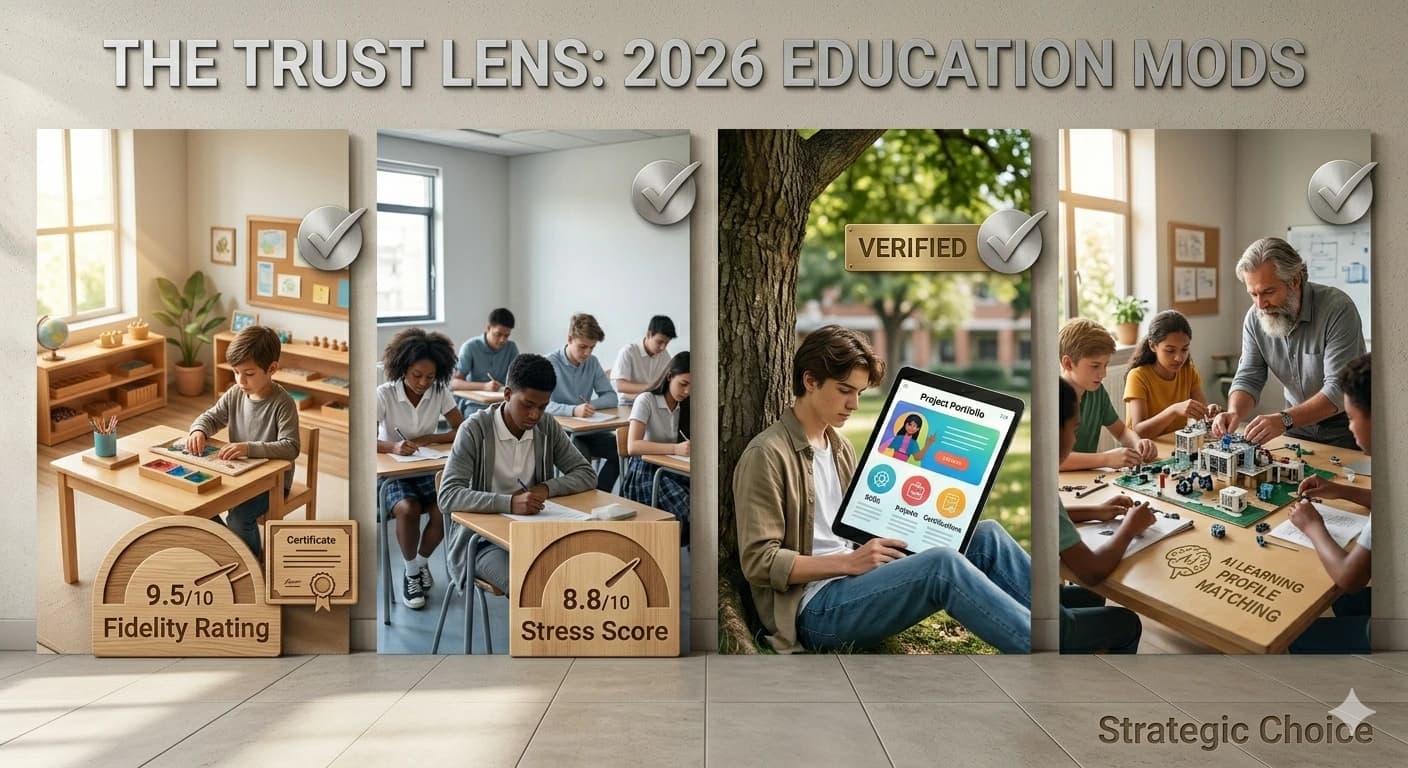
1. Holistic/Montessori Approach
- Purpose: This model supports child development by promoting independence, problem-solving, creativity, and emotional growth.
- Reality: The current state of education demonstrates a need for improvement in standardisation and exam transitions to help prevent students from falling "one year behind." Addressing misleading "Montessori" labels can also enhance the quality of authentic programs.
- Pinpoint: Famous alums like Jeff Bezos and Google founders credit it for creativity
- Challenge: The term "Montessori" is widely misused, leading to trust gaps and inconsistent quality.
- The "Brigaly" Fix: Use Fidelity Ratings. Since "Montessori" isn't a trademarked term, Brigaly can verify whether a school is AMI/AMS-certified or just using the name as a marketing gimmick.

2. Traditional Exam-Focused (The "Kota" Model)
- Purpose: These systems are highly organised and focus on rank, performance, and competition.
- The Reality: They create high-pressure environments to get students into top engineering and medical programs.
- Challenge: Success often comes at the cost of:
- Student well-being
- Creativity and long-term adaptability
- The "Brigaly" Fix: Implement Stress & ROI Scores. Instead of just ranking toppers, Brigaly can track the "cost" of those ranks in terms of student well-being and long-term career satisfaction.

3. Digital & E-Learning
- Purpose: Delivers unlimited access, maximum reach and flexibility.
- The Reality: Has low engagement, low completion rates and self-discipline is essential
- Challenge: Digital learning needs more:
- Accountability
- Genuine proof of skills
- The "Brigaly" Fix: Portfolio Integration.
- Change your learning by showcasing your skills.
- Showcase your projects, certifications, and skills prominently.
- Connect your education to job opportunities.

4. Experiential/Project-Based (The Finland Model)
- Purpose: Concentrate on practical skills, creativity, and relaxed learning conditions.
- The Reality: The method has hurdles in large groups and exam settings, making scaling difficult.
- Challenge:
- Difficult to scale globally
- Requires highly skilled educators
· The "Brigaly" Fix: Learning Profile Matching. Using AI to match a student's "competency path" (like the Finnish model) to specific institutions that value those specific skills.
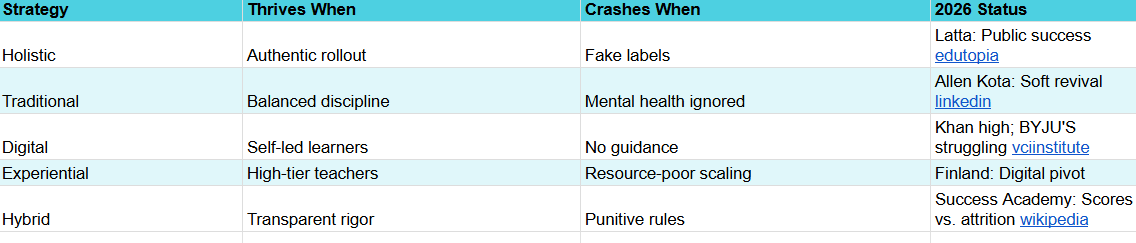
 Comparative Strategy Matrix
(2026 Edition)
Comparative Strategy Matrix
(2026 Edition)
Brigaly's Strategic Opportunity
- Many students end up in institutions that don't meet their needs or encounter misleading options.
- Brigaly assists by:
- Verifying the authenticity of schools.
- Comparing outcomes through:
- Portfolios.
- Peer feedback.
- Aligning strategies with individual student profiles.
- This approach transforms confusion into clear choices.
- Incorporating "fidelity ratings" for Montessori schools and stress scores for Kota can improve decision-making.
In 2026, the question isn't 'Where should I study?' but 'Can I trust the label?' Brigaly provides the lens to see through the marketing and find the mastery.
Stop guessing—start verifying.
Montessori India 2026best schools ChennaiKota coaching stressFinland education modelBrigaly edtechlearning styles parentsholistic vs traditional educationFidelity Ratings education
Comments (0)
Please sign in to join the conversation.
No comments yet. Be the first to share your thoughts!